
Uttar Pradesh, Gujarat and Odisha budgets maintain revenue surpluses despite welfare schemes while Rajasthan and West Bengal face high debt, fiscal deficits and low capital outlay.

Ask rediffGURU and tax expert Mihir Tanna your income tax-related questions.
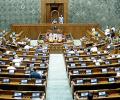
Bharatiya Janata Party on Thursday issued a three-line whip to all of its Lok Sabha MPs asking them to be present in the House for the passing of the Union Budget 2025-26.

Foreign brokerages remain cautious on the road ahead for the Indian equity markets. Though analysts at Nomura have revised their March 2026 Nifty target to 26,140 levels from the earlier 24,970, but the upside from the current levels is a modest 6 per cent. BofA Securities, on the other hand, has not made any change to its year-end Nifty target.

Brendan Lynch, the assistant US trade representative for South and Central Asia, will pay a five-day visit to India beginning Tuesday, days before US President Donald Trump's tit-for-tat tariff kicks in. The senior US trade official is expected to hold talks with Commerce Minister Piyush Goyal besides meeting a number of senior Indian officials.

India's Permanent Representative to the UN Ambassador Parvathaneni Harish said that the Indian sub-continent offers a "stark contrast" in terms of progress, prosperity and development models.
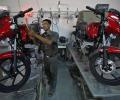
Bajaj Auto - the country's most valuable two-wheeler (2W) company by market capitalisation - met Street expectations in the January-March quarter (Q4) of 2024-25 (FY25) but still ended Friday as the worst performer on the Nifty 50, slipping 3.1 per cent.

Around 74 per cent rural households expect their incomes to increase in the next one year, according to a bimonthly survey conducted by the National Bank for Agriculture and Rural Development (Nabard) in May 2025. The percentage recorded was 72 in March.

Hero MotoCorp Ltd (HMCL) has been the best-performing auto stock over the last three months, gaining over 17 per cent during this period. Multiple tailwinds, especially on the rural front, are expected to boost its volumes. In addition to the demand drivers, new launches too should help drive growth both in the commuter and premium motorcycle categories.

Master the online ITR filing process and then learn the differences between the old and new tax regimes to pick your best option.

The RBI on Wednesday slashed key interest rate by 25 basis points, for the second time in a row, to support a shuttering economy hit by reciprocal tariffs imposed by the US. Following the rate cut, the key policy rate eased to 6 per cent providing relief to home, auto and corporate loan borrowers.
In Q1FY26, the bank reported fresh slippages of 8,200 crore, up 71 per cent Y-o-Y and sequentially. Of this, 7,500 crore is from the retail segment.

Macrotech Developers (Lodha), the country's second-largest listed real estate company, exceeded its 2024-25 (FY25) guidance, aided by a strong pre-sales performance in the January-March quarter (Q4), driven by launches. The company had guided for Rs 17,500 crore in pre-sales for FY25 and surpassed that with bookings of Rs 17,630 crore.

Continuing on the fiscally prudent path, the Modi government in the interim Budget refrained from announcing populist measures, which will help it trim the fiscal deficit to 5.1 per cent of the GDP next fiscal and 4.5 per cent in FY26.

Real estate developers are hoping that the slew of tax concessions announced in Union Budget 2025, set to take effect this financial year, will spur demand for affordable and mid-segment housing, even as the broader housing market shows signs of fatigue.

Listed paint majors posted another lacklustre showing in the January-March quarter (Q4) of 2024-25 (FY25), with average revenue growth under 3 per cent. Sales were weighed down by Asian Paints - the market leader and the only major to report a year-on-year (Y-o-Y) decline.

The government has approved the 'Terms of Reference' for the 16 Finance Commission, which makes recommendations on sharing of tax revenues between the Centre and states. The recommendations would cover a five-year period commencing April 1, 2026, Information and Broadcasting Minister Anurag Thakur said on Wednesday, giving details about the decisions taken at the Cabinet meeting last evening. The commission would submit its report by October 31, 2025, Thakur said.

Even as concerns grow over the residential real estate market reaching its peak, the outlook for office real estate remains strong, with listed real estate investment trusts (Reits) standing to benefit from sustained demand in the segment.

Tax experts answer your budget-related queries

The Rural Development Ministry has been allocated Rs 1.88 lakh crore in the Union Budget for 2025-26, around 5.75 per cent more than the allocation in the previous budget.

The Indian economy is recovering from the slowdown in momentum witnessed in the September quarter, driven by strong festival activity and a sustained upswing in rural demand, according to a Reserve Bank of India (RBI) bulletin released on Tuesday. An article on the 'State of the Economy' in the December bulletin noted that the global economy continues to exhibit resilience with steady growth and moderating inflation.

'Our AI strategy -- AI in Everything, Everything for AI, and AI for Everyone -- is now in action.'

The government is likely to provide a subsidy of Rs 35,000 crore to state-owned Indian Oil Corporation Ltd (IOC), Bharat Petroleum Corporation Ltd (BPCL), and Hindustan Petroleum Corporation Ltd (HPCL) to make up for losses they incurred on selling the fuel this fiscal, sources said.
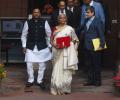
Finance Minister Nirmala Sitharaman on Saturday unveiled 'transformative' tax reforms that ranged from a simpler income tax law to higher TCS threshold for remittances and income tax benefits for middle class.

Moody's Ratings on Tuesday projected general government debt to stabilise above 80 per cent of GDP over the next three years, down from 89.3 per cent in 2020-21. "General government interest payments to fall to around 24 per cent of general government revenue over the next two years from over 28 per cent in fiscal 2020-21, although this remains much higher than the median 8.7 per cent recorded by Baa-rated peers," Moody's Ratings associate managing director Gene Fang said in a post-Budget reaction.

"The new structure will substantially reduce taxes on the middle class and leave more money in their hands, boosting household consumption, savings and investment," Sitharaman said presenting what was dubbed as 'reformist' budget for the next fiscal in Lok Sabha.

The environment ministry is likely to soon issue regulations that will mandate automakers to recycle a specified percentage of steel from old vehicles, starting from the next financial year, according to people familiar with the matter. "We recently held a meeting with members of the Society of Indian Automobile Manufacturers (Siam). "The final regulations are likely to be issued in the next 10 days," a government source informed.
Analysts have largely maintained their positive outlook on HDFC Bank, as the private lender reported in-line results for the October-December quarter (Q3) of the current financial year (2024-25/FY25). They believe the results were 'strong' given the tough macro environment, and relative to peers.

Footwear companies were among the weakest performers in the consumer discretionary sector during the October-December quarter (Q3) of 2024-25. The combined revenue growth of the top four listed firms was just 2.9 per cent year-on-year (Y-o-Y) - the lowest among major discretionary categories.

It will be the second Budget of the Modi 3.0 government and eighth straight Budget for Nirmala Sitharaman, rare in Indian polity.

Information technology (IT) stocks ended at their lowest in nearly nine months after a fresh bout of selling, triggered by concerns over a recession in the US, the key market for domestic software exporters. A report by Morgan Stanley citing risks to growth also weighed on sentiment.

rediffGURU Vipul Bhavsar answers readers' personal income tax queries.
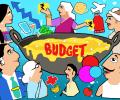
Following the lacklustre growth numbers in the second quarter (Q2FY25), economists believe the upcoming Union Budget for 2025-26 should focus on reforms that will stimulate consumption, manufacturing and spur employment. India's growth unexpectedly slowed to 5.4 per cent in the second quarter, due to low capital formation, weak consumption, besides adverse weather impact.
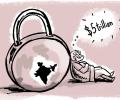
It would be a difficult task for the Indian economy to reach the $5-trillion mark a year before the International Monetary Fund (IMF) projection of 2026-27. Pankaj Chaudhary, minister of state for finance, said in the Rajya Sabha on Tuesday that the government is taking steps to make the country a $5-trillion economy at a date earlier than the IMF's projection. In that context, it would not be difficult to meet the projection in the third quarter of FY27.

In a major relief for taxpayers, Finance Minister Nirmala Sitharaman on Saturday announced an increase in the threshold for Tax Deduction at Source (TDS) on rent from Rs2.40 lakh per annum to Rs6 lakh per annum while presenting the Union Budget 2025-26. Presenting the budget in Lok Sabha, the Finance Minister said, "The annual limit of Rs 2.40 lakh for TDS on rent is being increased to Rs 6 lakh.

High frequency indicators, like vehicles sales, air traffic, steel consumption and GST E-way bills, point towards a sequential pickup in momentum of economic activity during the second half of the fiscal 2024-25 and sustain moving forward, RBI Bulletin said on Wednesday. However, a strong dollar, driven by US economic resilience and trade policy pivots, could exacerbate capital outflows from emerging economies, push risk premiums higher, and intensify external vulnerabilities, said an article on 'State of the Economy' published in RBI's February bulletin.
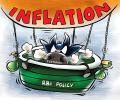
The Reserve Bank on Wednesday retained the retail inflation projection at 4.5 per cent for fiscal 2024-25, with Governor Shaktikanta Das stressing that the central bank will have to closely monitor the price situation and keep the "inflation horse" under tight leash lest it may bolt again. Unveiling the October bi-monthly monetary policy, the Governor also said the flexible inflation targeting (FIT) framework has completed 8 years since its introduction in 2016 and is a major structural reform of the 21st century in India.

After lagging behind the broader market over the past three and six months, defence sector stocks have regained ground, reversing their performance from the past month. Concerns about slowing order inflows, execution hurdles, supply chain disruptions, and high valuations had weighed on the sector.
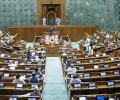
The deportation of Indians from the United States, deaths in the Maha Kumbh stampede and the joint Parliamentary committee report on the Waqf bill were among the issues that led to heated exchanges and some disruptions in an otherwise smooth first part of the Budget session that ended on Thursday.

Ask rediffGURU and tax expert Mihir Tanna your income tax-related questions.
